
Before Their Stories Disappear
Preserving Black Family History

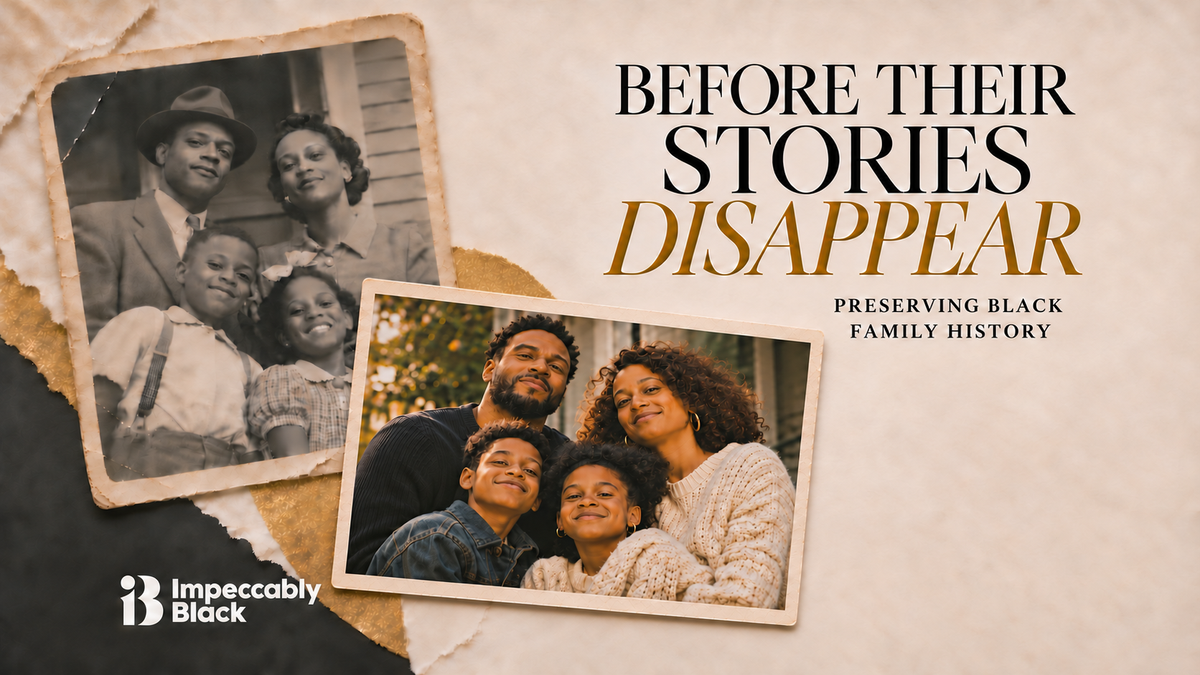
There are things your grandmother knows that Google will never tell you.
She may remember the neighbor who watched everybody’s children, the sound of a street before it became a busy road, or the reason your grandfather rarely spoke about a particular year. She might recognize every face in the photograph hanging in the hallway—the one you have passed for years without thinking to ask who those people were.
At the dinner table, these details can seem small. An aunt starts telling a familiar story, somebody interrupts with a correction, and everyone laughs. You assume the story will be there next Thanksgiving, ready to be told again. That assumption is how so much family history slips away.
The history living in our homes
When we talk about Black history, we rightly remember Harriet Tubman, Frederick Douglass, Ida B. Wells, Martin Luther King Jr. and Rosa Parks. Their work changed the country. Yet the history we inherit also lives in stories that never appeared in a textbook: a mother working two jobs to keep her children in school, a family making a new home after leaving the South, a father saving for a house in a neighborhood that had once shut him out.
These experiences shaped families and communities, even when nobody wrote them down. A photograph might establish who stood together on a front porch in 1962. It cannot tell us what they argued about that morning, which one was about to move away, or why the occasion mattered enough to bring out the camera. For that, we need someone who remembers.
Sometimes we discover how much we do not know only after a relative dies. Then come the questions: What was her mother’s maiden name? Why did the family move north? Who taught Grandpa his trade? We search through boxes and call cousins, hoping that someone else thought to ask. A few answers emerge; others are gone for good.
Between 1946 and 2026
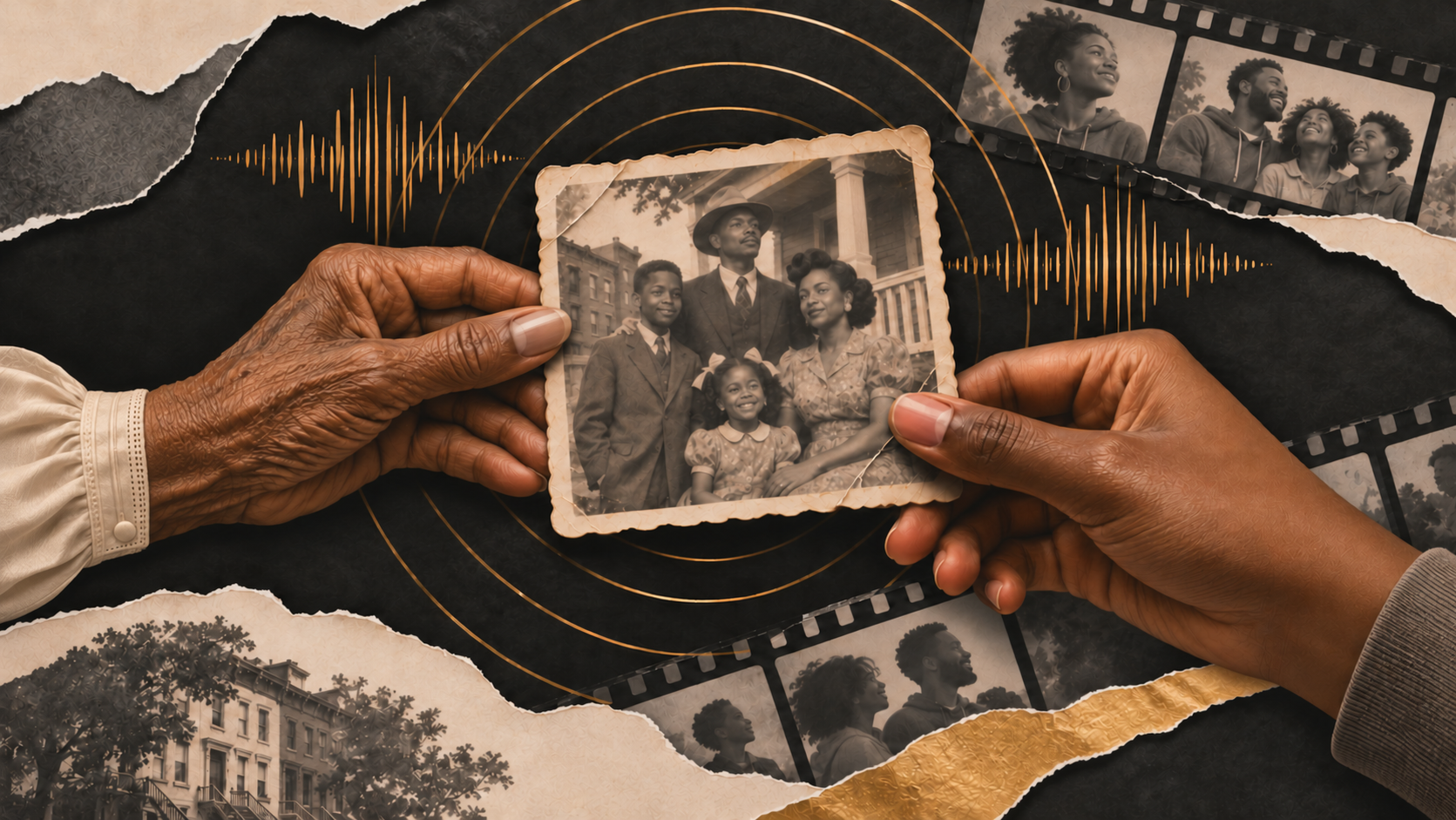
Picture two women at a kitchen table. One was born in 1946, when segregation still governed much of American life. The other is coming of age in 2026, with a phone in her pocket and more information at her fingertips than her great-grandmother could have imagined.
The eighty years between them hold the Civil Rights Movement, the end of legally enforced segregation, enormous changes in education and work, and the election of the first Black president. Both women may know those milestones. What the younger one cannot learn from a timeline is how they felt inside her family’s home.
Perhaps the older woman remembers a school she could not attend, but also the friend who walked with her every morning to the school she did attend. She may recall the dress she wore on her first date, the store where she earned her first paycheck, or the day she decided to leave a town she loved. Her life contains hardship, certainly, but it also contains humor, ambition, romance, ordinary pleasures and choices that deserve to be understood on their own terms.
Ask what she wanted to be at twenty. Ask which decision frightened her most. Ask what she misses about the neighborhood where she grew up, and what she is glad has changed. Her answers may complicate what the younger woman thought she knew about the past. They might also change the way she sees herself.
Too often, Black family history is told mainly through struggle. We must never minimize slavery, segregation, discrimination or violence. But the people who lived through those realities also hosted parties, made bad jokes, fell in love, raised children, opened businesses and celebrated birthdays. Their lives were not waiting for history to happen. They were history, lived day by day.
Ask while you can
Preserving those memories does not require a film crew or a professional archive. Start with one person and one conversation. Sit somewhere comfortable. Put your phone nearby, if they agree to a recording, and ask about a place or a person they have mentioned before.
What did your childhood home look like? Who made you laugh the most? What did your parents believe that you later questioned? Which day would you choose to live again? And what is something you wish the family understood about you?
Give the answers room. A story may take a detour through a neighbor’s kitchen or a cousin’s wedding before it reaches the point. That detour might be the part nobody else knows. You can always ask a follow-up question. You cannot hurry someone into remembering.
Before recording or sharing, ask permission and explain where the recording might go. Some memories are for the whole family; others are private. The Oral History Association’s guidance emphasizes informed consent and respect for the person telling the story. That care is part of preserving it well.
Photos help us remember faces. Voices carry something different: the pause before a difficult answer, the particular way someone says your name, the laugh that arrives before the punch line. Years from now, those sounds may mean as much as the facts being recorded.
The next time someone begins the story you have heard a dozen times, let them finish it. Ask what happened afterward. Ask who else was there. If they are comfortable, press record. Someday, that familiar story may be the one you wish you could hear just once more.
We want to hear from you: What family story has stayed with you—or what question do you wish you had asked? Share it in the comments. Your answer might inspire someone else to start a conversation while they still can.


