The Black Engineer Who Changed Video Games Forever
Fifty years ago, Black engineer Jerry Lawson helped revolutionize home gaming through the Fairchild Channel F. His story deserves a place in gaming history.

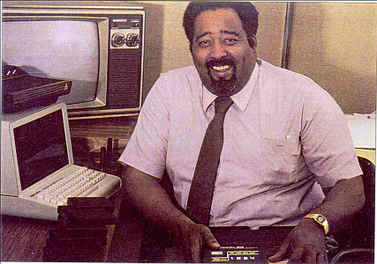
Fifty years ago, a Black engineer helped change the future of home video games. His name was Jerry Lawson.

Long before gaming became a global spectacle of streaming, esports, and billion-dollar franchises, there was an engineer who helped make a key technological leap possible.
His name was Gerald “Jerry” Lawson.
In 1976, Lawson led the engineering team behind the Fairchild Channel F, the first commercially released home video game console to use interchangeable ROM game cartridges.
That idea sounds simple now, but at the time, it represented a major breakthrough.
Instead of being limited to the games built into a console, players could purchase additional cartridges and expand their collection.
One machine. Different games. New possibilities.
And helping lead that revolution was a Black engineer whose contributions would influence generations of gaming technology.
A Curious Mind From Brooklyn
Born in Brooklyn, New York, in 1940, Lawson developed an early fascination with electronics.
As a child, he experimented with technology, repaired equipment, and learned about amateur radio.
His interests eventually led him to California, where he joined Fairchild Semiconductor in 1970.
At a time when relatively few Black engineers worked in Silicon Valley, Lawson was helping shape an emerging technological industry.
He wasn’t interested in simply accepting how things worked.
He wanted to make them better.
Changing the Way We Play
Before cartridge-based consoles became commonplace, many home gaming systems offered only a fixed collection of games.
The idea that someone could purchase a console and continually expand its game library helped redefine what home gaming could become.
Lawson and his team at Fairchild helped turn cartridge technology into a practical consumer product, building on earlier engineering work by Alpex Computer Corporation.
The Fairchild Channel F arrived in 1976.

Its interchangeable cartridges allowed players to experience different games using the same console.

That flexibility would become one of the defining characteristics of home gaming for decades.
Although the Channel F never achieved the commercial success of Atari’s later cartridge-based system, its place in gaming history was significant.
Lawson and his colleagues helped establish a model that other companies would build upon.
A Legacy Bigger Than One Console
Today, video games offer experiences that would have seemed unimaginable in 1976.
Players explore enormous virtual worlds, compete with people around the globe, and experience stories through technologies that continue to evolve.
Modern gaming systems no longer depend exclusively on physical cartridges, but the idea of a platform supporting an expanding library of games remains central to the industry.
Lawson’s work helped advance that concept.
And his contributions didn’t end with Fairchild.
In the early 1980s, he founded Video Soft, a video game development company, continuing his involvement in an industry he had helped transform.
His achievements eventually gained wider recognition, including an honor from the International Game Developers Association shortly before his death in 2011.
Fifty Years Later
In 2026, the Fairchild Channel F reaches its 50th anniversary.
It’s an opportunity to remember not only a groundbreaking console but also the people who helped bring it into existence.
Jerry Lawson didn’t invent video gaming by himself. Innovation rarely happens that way.
But he helped change what a home video game console could do.
His story is a reminder that some of the most influential contributions to technology come from people whose names aren’t always widely recognized.
The next time you pick up a controller, think about how far gaming has come.
And remember Jerry Lawson.
Because his name belongs in the story.