John Moutoussamy Was Building Chicago. Why Don’t More People Know His Name?
From a modernist home in Chatham to the Johnson Publishing headquarters, discover how pioneering Black architect John Moutoussamy shaped Chicago far beyond one famous landmark.


From a family home in Chatham to schools, housing, civic institutions, and the famous Ebony/Jet headquarters, the pioneering Black architect helped shape Chicago while pushing through barriers that had little to do with his talent.
Before John Moutoussamy designed a landmark for one of America’s most powerful Black media companies, he designed a home for his own family.
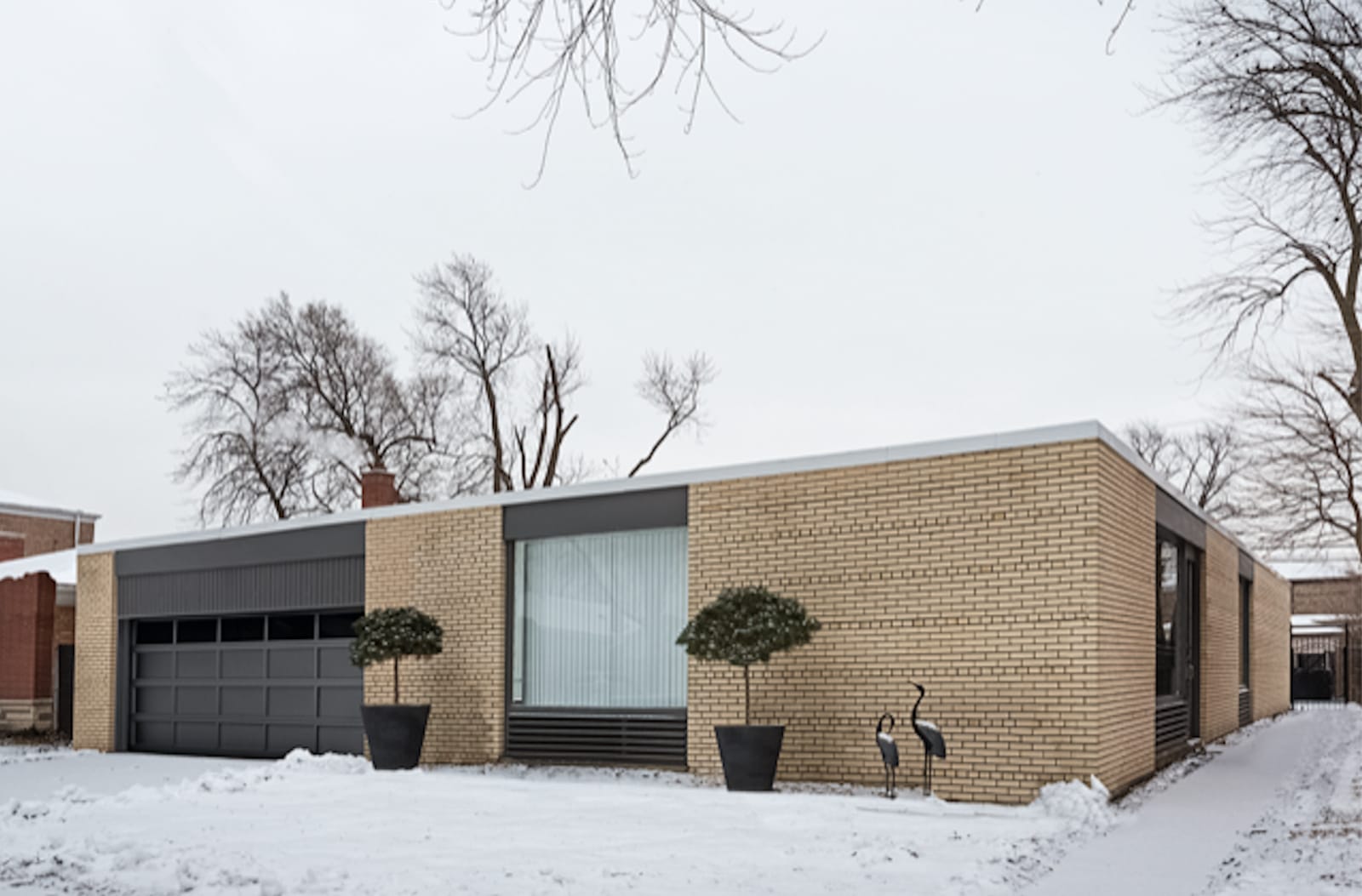
On a quiet block in Chicago’s Chatham neighborhood, the house at 361 East 89th Place is a study in restraint. Built in 1954, it has a low roof, blond brick, and the clean horizontal lines of modern architecture. There is nothing showy about it. The beauty is in how carefully everything fits together.
Moutoussamy designed the house for himself, his wife Elizabeth, and their three children. His daughter, photographer Jeanne Moutoussamy-Ashe, later recalled the pride she felt growing up in a home her father had created.
It is an intimate place to begin his story. A young Black architect, raising a family on Chicago’s South Side, was already applying his ideas about design to the life he wanted to build.
Today, Moutoussamy is most often remembered for the Johnson Publishing Company headquarters—the South Michigan Avenue tower that housed Ebony and Jet. It deserves the attention. But if that is the only building we associate with his name, we miss the scope of his work and the determination it took to do it.
John Warren Moutoussamy helped design the Chicago where people lived, learned, worked, received care, organized, and made history.
An architect in a city of architectural giants
Moutoussamy was born in Chicago in 1922. He served in the Army during World War II and then used the G.I. Bill to study architecture at the Illinois Institute of Technology. There he learned under Ludwig Mies van der Rohe, the influential modernist whose glass-and-steel buildings helped reshape the city.
He graduated in 1948 with the training to compete in a demanding profession. Training, though, was not the same as access.
The architectural historian Iker Gil, in his detailed account of Moutoussamy’s career, notes that Moutoussamy applied to the prestigious firm Skidmore, Owings & Merrill but was not hired. Some of his classmates found positions there. The record does not establish the reason for that decision, but it shows the uncertain professional footing of an architect whose education and ability were never in doubt.
He built his experience through other Chicago practices and began designing projects of his own. His work in the 1950s included the Chatham home and other houses in the neighborhood, where a growing Black professional class was creating a community of distinctive modern residences.
For Moutoussamy, modernism was not just a style for office towers downtown. It could belong on an ordinary residential block, inside a family’s daily life.
The commission that exposed the barriers
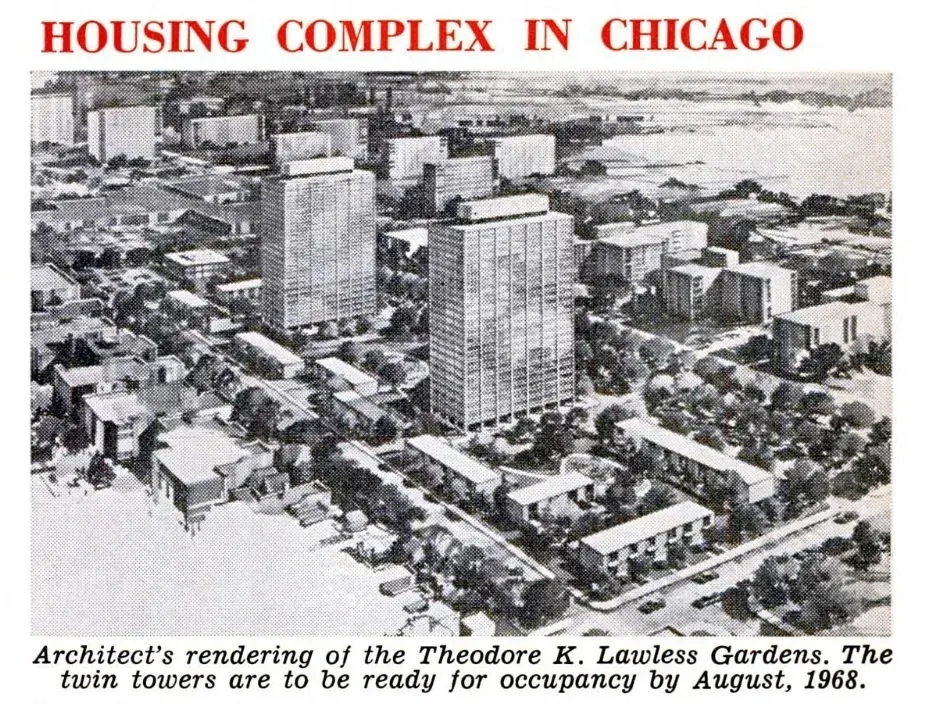
In 1965, Moutoussamy began working independently on Theodore K. Lawless Gardens, an ambitious housing development in Bronzeville. The project was meant to provide middle-income housing and included apartment towers and townhomes.
The scale of the opportunity was enormous. So was the obstacle.
According to Chicago landmark research later cited by WTTW’s Chicago Stories, banks would not support the project with Moutoussamy, a Black architect, in charge on his own. Financing depended on his teaming with an established architectural firm.
Think about what that meant. A qualified architect had won the opportunity to design a major development, yet the institutions controlling the money questioned whether he should be allowed to lead it.
Moutoussamy partnered with Dubin, Dubin and Black. He became the project’s lead designer and architect of record, and the relationship eventually developed into something historically significant: he became the first Black architect to make partner at a large Chicago architectural firm. His name was added to the firm—Dubin, Dubin, Black & Moutoussamy.
The very project that revealed how racism constrained his career helped establish him as a leader in the profession.
And Lawless Gardens was not simply a steppingstone to a famous commission. It was part of his larger contribution to Chicago housing, a body of work that put modern design into communities well beyond the downtown business district.
When Black media needed an architect
The opportunity for which he is best known came from another ambitious Chicagoan: publisher John H. Johnson.
By the late 1960s, Johnson Publishing Company had become a national force. Ebony and Jet told stories, documented achievement, reflected beauty, and covered injustice in ways mainstream publications often did not. Johnson wanted a headquarters that would make that success visible.
He also wanted a Black architect to design it.
The decision met resistance from financiers, according to accounts of the project, but Johnson persisted. He hired Moutoussamy, whose modernist training and professional experience made him well suited to the task.
At 820 South Michigan Avenue, Moutoussamy designed an 11-story headquarters defined by horizontal bands of stone, recessed windows, and a dignified, precise façade. Dedicated in May 1972, it stood just west of Grant Park, on one of the city’s most prominent streets.
It became the first downtown Chicago high-rise commissioned by a Black-owned corporation and designed by a Black architect. Architectural organizations continue to describe it as the only downtown Chicago high-rise designed by a Black architect.
The building’s celebrated interiors, designed separately by Arthur Elrod and William Raiser, were full of bold color, pattern, artwork, and the unforgettable Ebony Test Kitchen. Moutoussamy’s understated exterior provided the architectural setting for that expressive world.
The Ebony and Jet sign remains above the building today. But the achievement was not only that Moutoussamy had designed a landmark. It was that two Black men—an architect and a publisher—had insisted their ambitions belonged in the heart of the city.
His Chicago was bigger than Michigan Avenue
Moutoussamy’s career continued well beyond that moment. His buildings touched the everyday lives of Chicagoans in ways a magazine headquarters never could.
He designed work for Harry S. Truman College in Uptown, Richard J. Daley College on the Southwest Side, and Olive-Harvey College on the Far South Side. These were places where students could prepare for new careers and opportunities.
He designed the Woodlawn Neighborhood Health Center, serving a community’s need for care, and later the Bessie Coleman Library, where people could gather around books, information, and education.
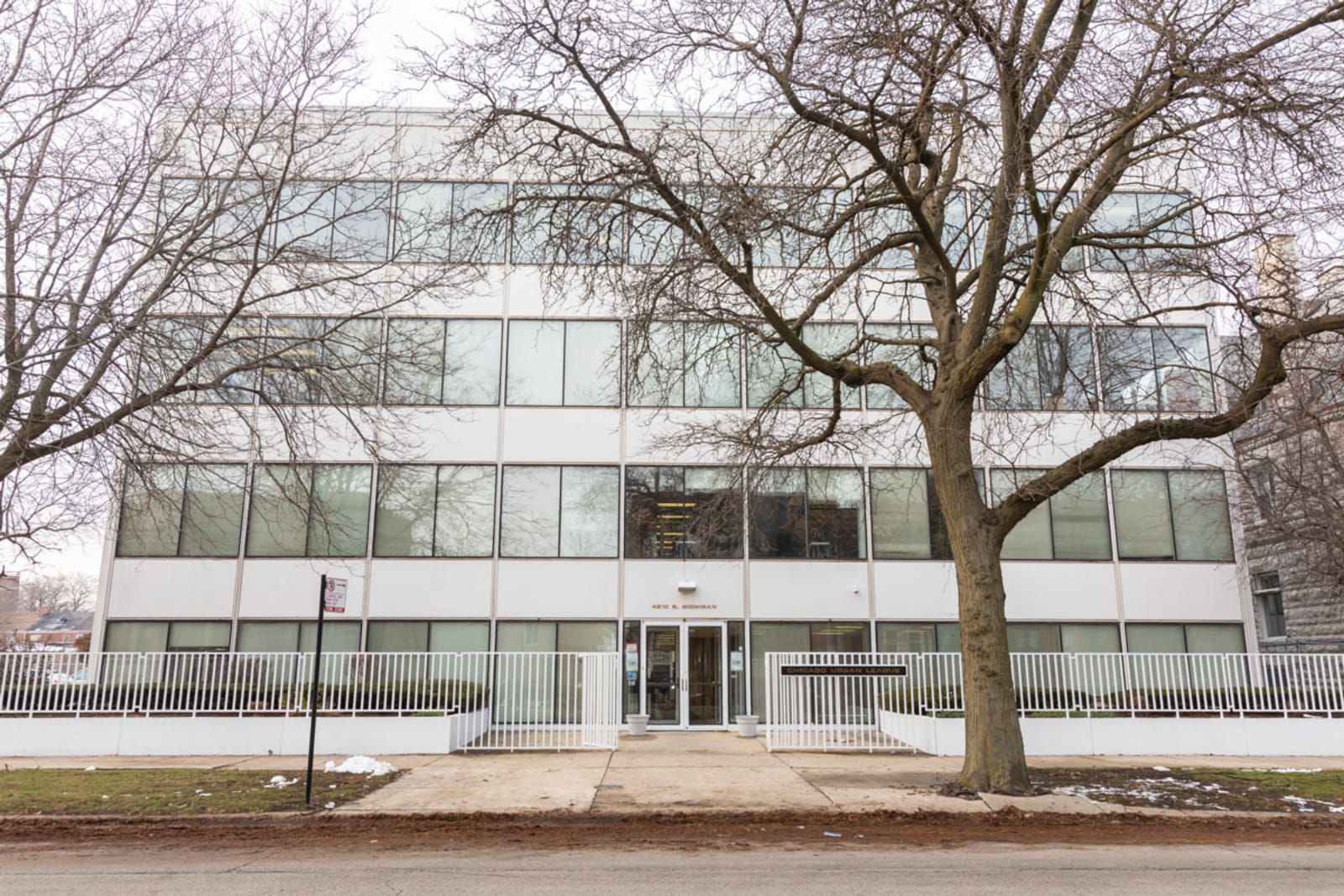
His contributions also included the Alpha Kappa Alpha International Headquarters in Hyde Park and the Chicago Urban League headquarters in Bronzeville—buildings for organizations with their own long histories of Black leadership and civic engagement.
His residential work ranged from individual South Side homes to large apartment developments, including Regents Park near Lake Michigan. Some projects were monumental. Others were deeply practical. All were part of a career that approached architecture as something people actually use, not simply admire from the sidewalk.
And he served the city outside his office. Moutoussamy became a Fellow of the American Institute of Architects in 1978. He held leadership and trustee roles associated with the Art Institute of Chicago, the School of the Art Institute, and the Chicago Plan Commission.
He was building a professional legacy and participating in decisions about the city’s future.
A legacy too large for one landmark
Moutoussamy died in 1995 at the age of 73. In the decades since, the former Johnson Publishing headquarters has received deserved attention and was designated a Chicago landmark in 2017.
Yet recognition of that building has not always extended to the architect’s larger body of work.
In a 2022 examination of his career, MAS Context reported that his other buildings lacked similar landmark protection. Historians and preservation advocates argued that the house in Chatham, his civic buildings, and other works needed to be studied and valued—not merely treated as footnotes to his most famous project.
That argument is about more than architectural preservation. It asks whose work a city chooses to remember.
The Johnson Publishing tower is easy to recognize because the Ebony and Jet names still rise above Michigan Avenue. There is no equally famous sign on every school, home, health center, library, or community headquarters Moutoussamy helped design.
But his influence is there all the same.
The story of John Moutoussamy is not only about being the first Black architect to cross a particular professional threshold. It is about what he did after crossing it—and how many parts of Chicago bear the evidence.
Start with the modest modernist house in Chatham. Follow his work through Bronzeville housing, college campuses, neighborhood institutions, and the headquarters of a media company that changed American culture.
The route tells the story of an architect who refused to let other people’s limits define the scale of his work.
John Moutoussamy did not merely earn a place in Chicago’s architectural history. He helped draw that history—and deserves to be seen in the full picture.