Before the Smart Doorbell, There Was Marie Van Brittan Brown
Marie Van Brittan Brown and Albert L. Brown co-invented a home video security design in 1966—decades before smart doorbells became commonplace.

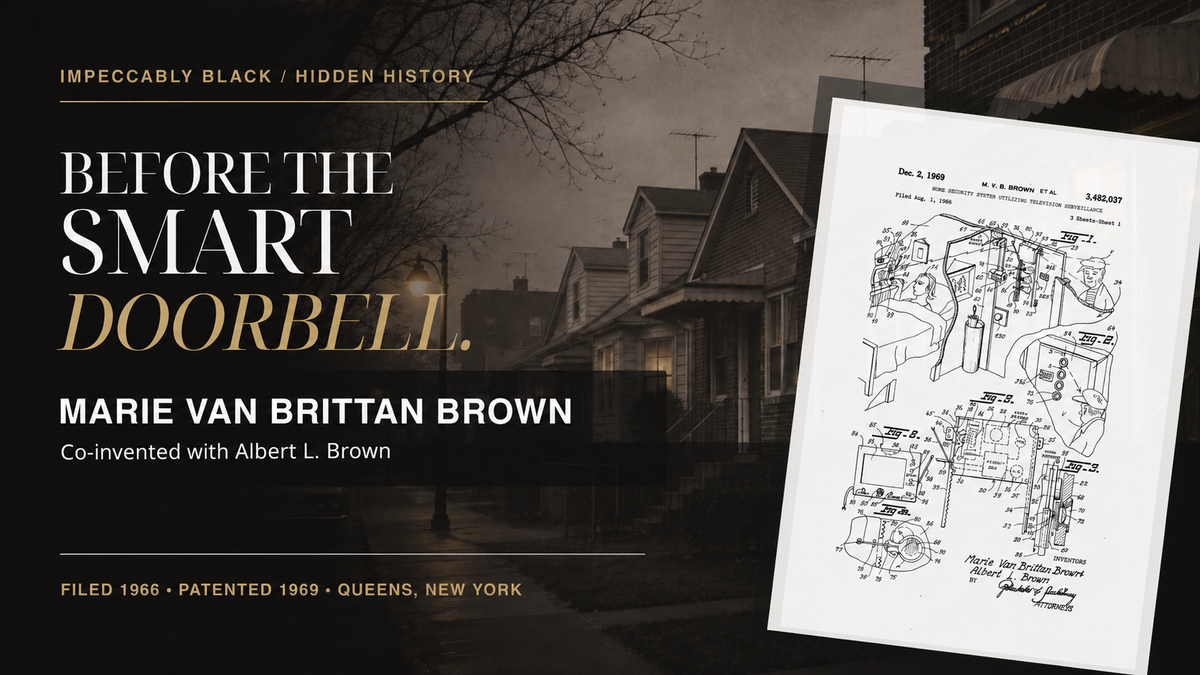
In 1960s Queens, nurse Marie Van Brittan Brown imagined a safer way to answer the door. Working with her husband, electronics technician Albert L. Brown, she developed a home video security concept that anticipated technology millions use today.
Think about the last time your phone told you someone was at the front door. You may have watched a live video, spoken through a speaker, or decided whether to let a visitor in without moving from your seat.
Now imagine wanting those same choices in 1966—decades before app-connected cameras became common household products.
That was the problem Marie Van Brittan Brown set out to solve.
Brown was a nurse living in Jamaica, Queens, New York. Her work could keep her out late, and her husband, Albert L. Brown, an electronics technician, also worked irregular hours. Home was not always the place where she felt most secure. In a period of growing concern about crime and slow police response, she began imagining a way to know exactly who was outside her door before she opened it.
What she devised was more than an alarm. It was a system for seeing, hearing, communicating, and responding from inside the home.
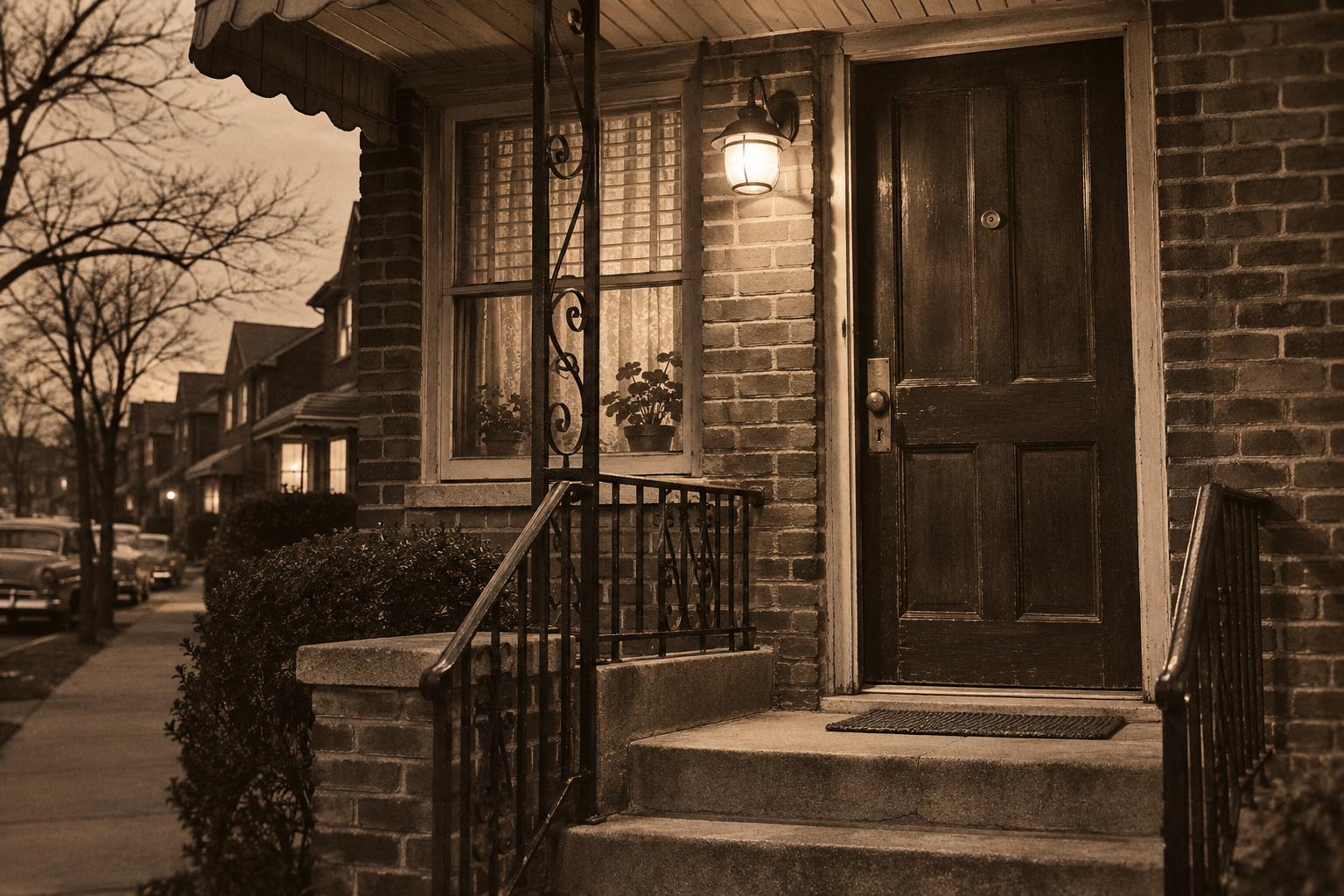
The problem wasn't just the lock
Most front doors give a person on the inside a limited set of options. Look through a peephole. Ask who's there. Open the door—or don't.
Brown was thinking beyond that binary choice. What if a resident could look at a visitor on a screen without approaching the door? What if they could speak without opening it? What if they could call for help or remotely release the lock from another part of the home?
That idea was especially meaningful for someone whose schedule sometimes left her alone at night.
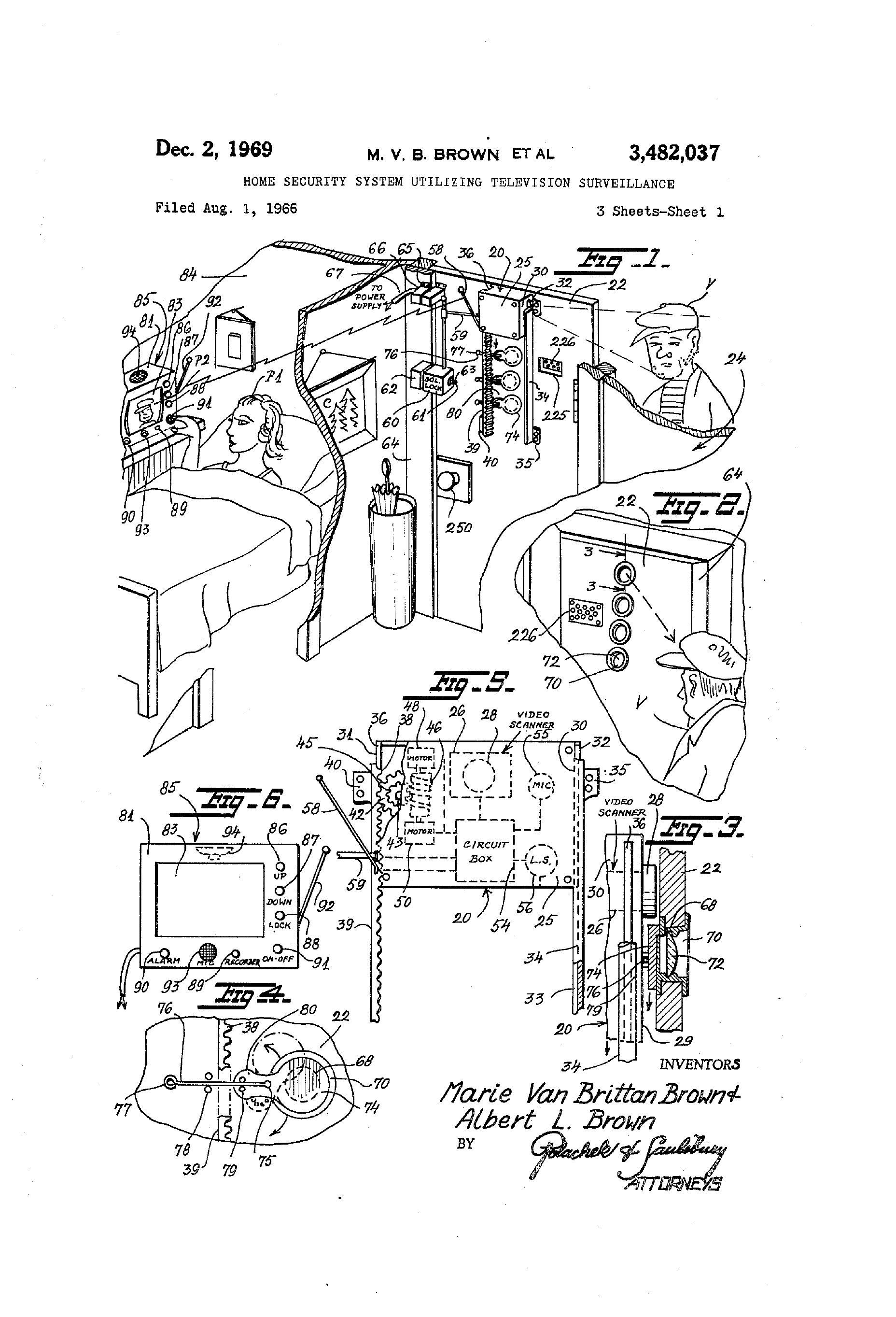
Brown worked with Albert, whose technical background helped turn the concept into a detailed design. On August 1, 1966, they filed a U.S. patent application for a “Home Security System Utilizing Television Surveillance.” Both were named inventors, with Marie listed first.
The patent, No. 3,482,037, was granted on December 2, 1969.
One invention. Several ideas we now take for granted.
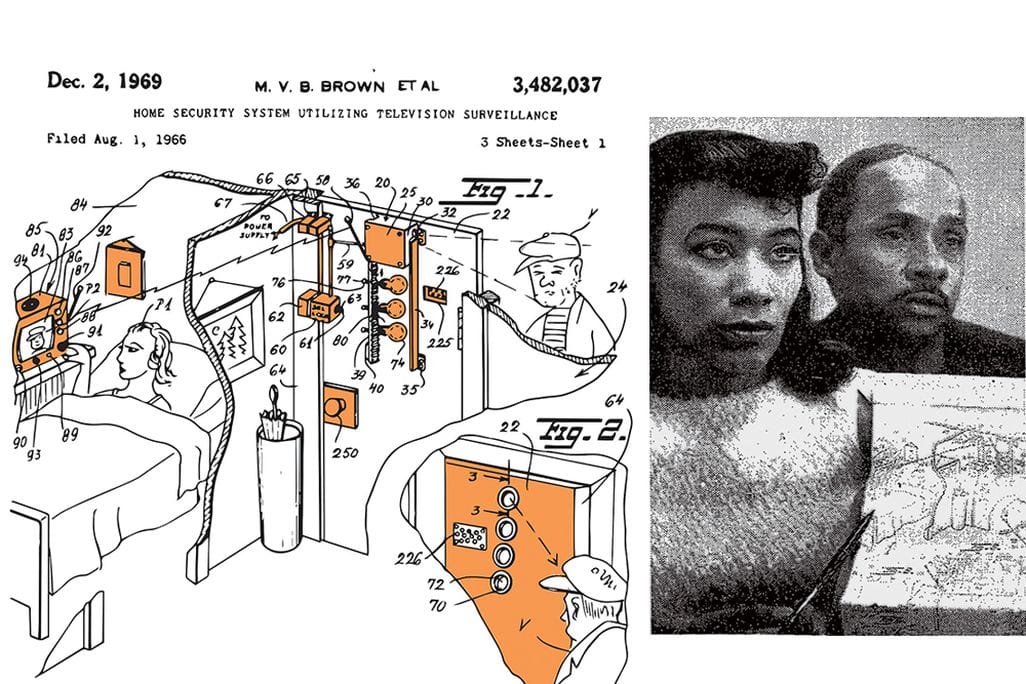
Look closely at the original patent drawings. They don't depict a simple bell or camera attached to a door. They show components working together across an entire home.
- Four viewing points: Different-height peepholes allowed visitors to be seen whether they were tall, short, standing, or crouching.
- A movable television camera: Mounted inside the door, the camera could be moved up and down to view through those openings.
- A video monitor: A resident could view the person outside from within the home.
- Two-way audio: Microphone and speaker equipment made it possible to communicate across the closed door.
- Remote access and an alarm: Controls allowed the occupant to release the door lock from a distance or activate an emergency alarm.
Today these features sound ordinary. In the mid-1960s, combining them into one residential security proposal was a remarkable act of imagination.
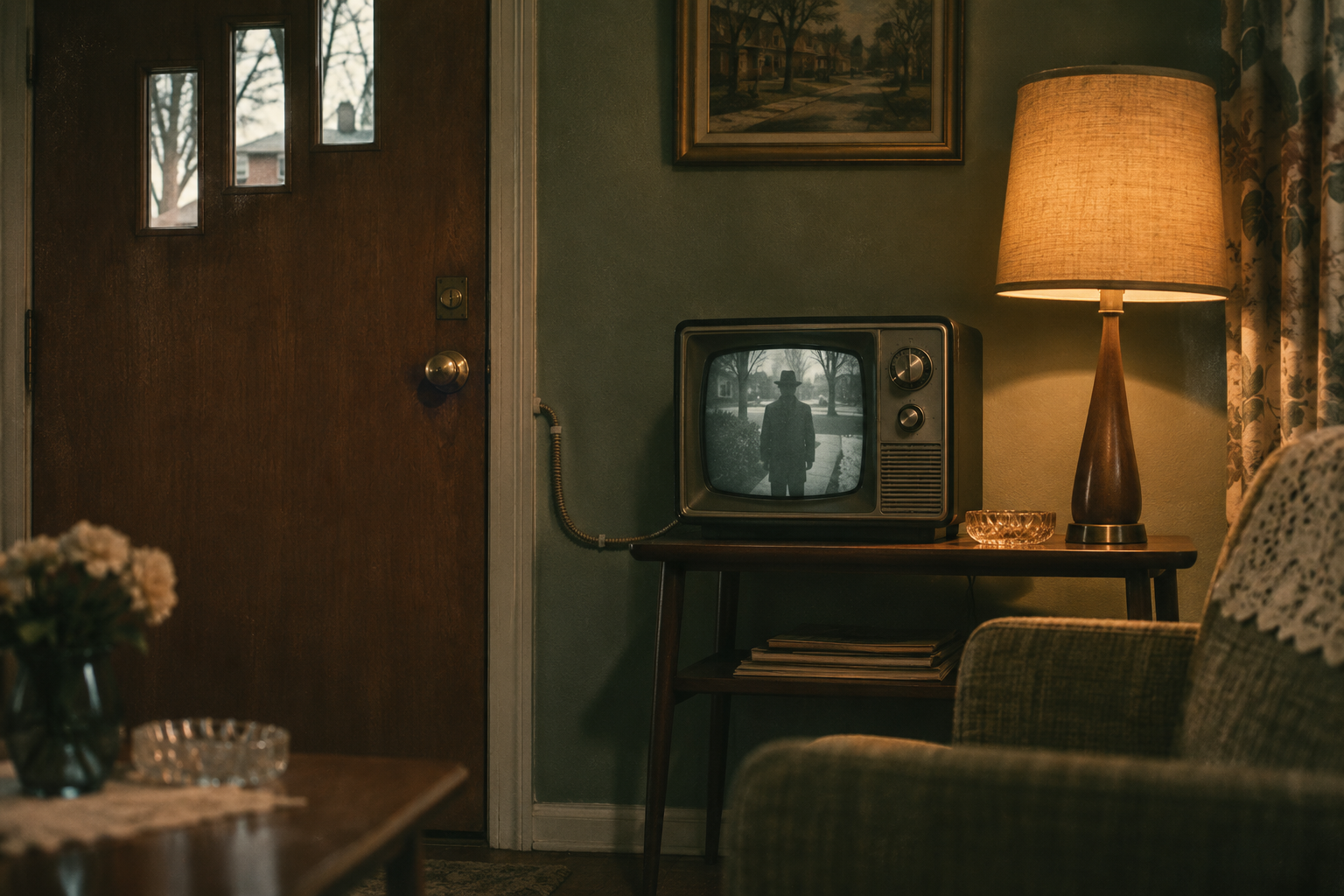
The breakthrough wasn't a single gadget. It was the idea that a home could help its occupants decide what happened at the front door.
Ahead of the market
The Browns received recognition for the design, but that did not mean it became a commercial product. As the Smithsonian has reported, the equipment was not in production when the patent was announced, and the Browns hoped manufacturers and homebuilders might take an interest. The expense of installing such a system likely made widespread adoption difficult at the time.
The idea outpaced the technology and economics of its era.
That distinction matters. It would be misleading to say Brown invented every camera doorbell or that a particular modern company directly copied her design. What the patent does establish is something powerful: years before the modern consumer market existed, Marie and Albert Brown had documented an integrated home-video security concept that anticipated features familiar today.
Their patent was subsequently cited in other patent applications, another indication that the design remained relevant to later technical work.
Who gets remembered as an innovator?
Innovation histories often center the company that made a product popular or the executive who brought it to market. But an invention can begin somewhere quieter: with an everyday problem, a sketch, a partner at the kitchen table, and the conviction that something should work better.
Brown was not a Silicon Valley founder. She was a working nurse who recognized a need in her own community and took the idea seriously enough to pursue a patent.
It is also important to tell the story completely. Her husband, Albert, was a named co-inventor and contributed the electronics expertise behind the design. Marie's vision deserves its place in the history of technology without erasing the collaboration documented on the patent itself.
Marie Van Brittan Brown died in 1999. She did not live to see the current generation of connected doorbells and phone-controlled security systems become commonplace. But the questions she asked—Who's there? Can I see them? Can I speak to them? Can I keep my family safe?—are the same questions that modern products still try to answer.
Before a home could send an alert to a smartphone, Brown imagined a home that could look back at the person knocking.
That vision belongs in the story of how we live with technology today.
The original document
U.S. Patent No. 3,482,037, Home Security System Utilizing Television Surveillance — invented by Marie Van Brittan Brown and Albert L. Brown; filed August 1, 1966; granted December 2, 1969. Read the patent and view the original drawings.
Read more on Black innovators
The Black Engineer Who Changed Video Games Forever: Jerry Lawson